The Challenge
Denver’s former code relied heavily on conventional Euclidean zoning, layered overlays, and negotiated approvals. It did not consistently reflect the city’s adopted growth strategy or urban design goals. The City needed a regulatory structure that:
- Reinforced neighborhood character while accommodating growth
- Enabled mixed-use corridors and transit-supportive density
- Improved predictability and administrative clarity
- Reduced reliance on discretionary rezonings and PUDs
Code Studio’s Approach
Code Studio’s principals served in central drafting and calibration roles as part of the consultant team that led the rewrite. The team developed a new district framework and dimensional system grounded in urban form and context.
Key elements included:
- Context-Based District Structure: Residential, main street, mixed-use, commercial, and industrial districts organized by neighborhood context and intensity.
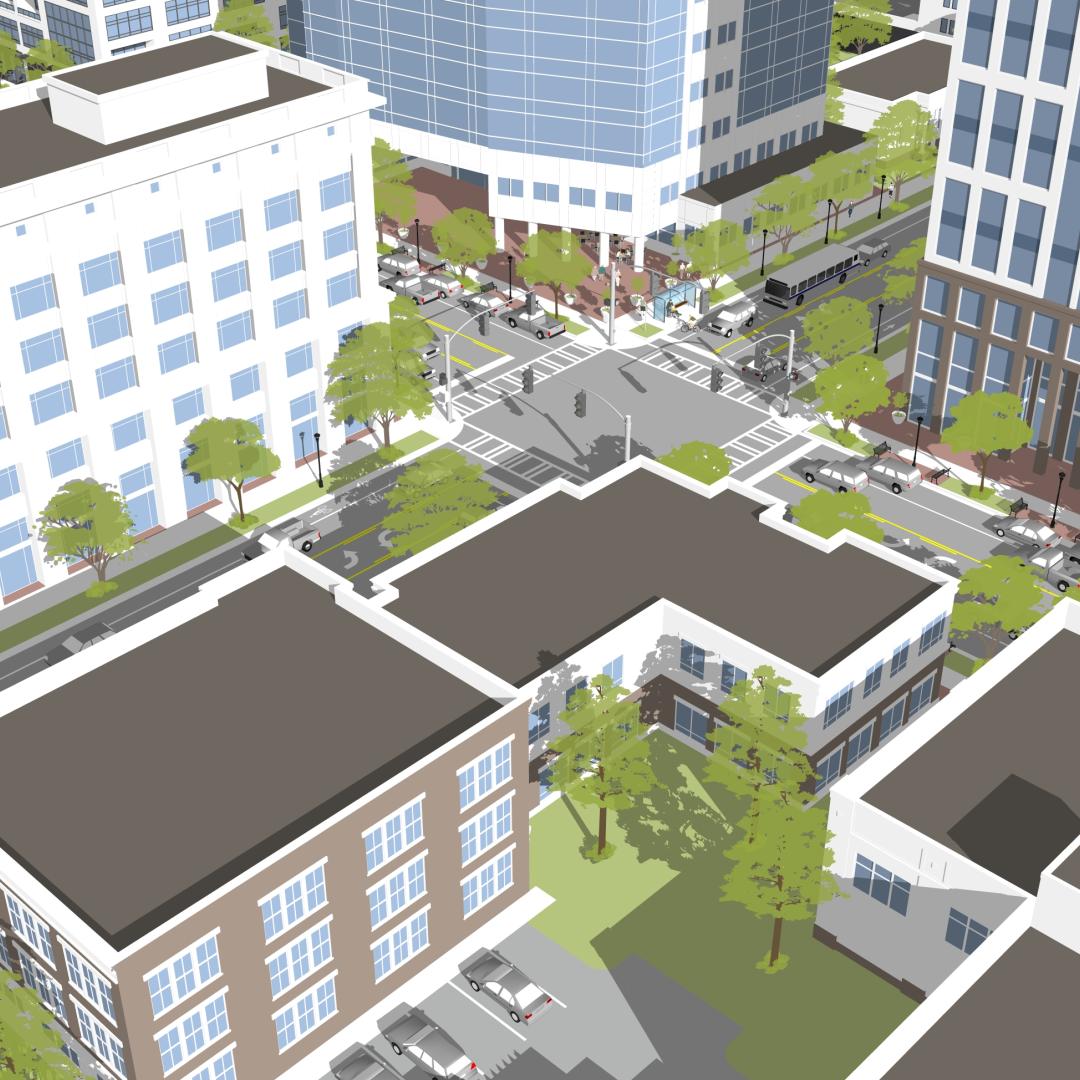
- Form-Driven Standards: Building height, build-to requirements, lot configuration, and frontage standards used to shape urban form rather than relying solely on use separation.
- Simplified Use Tables: Consolidated and modernized land use categories to reflect contemporary development patterns.
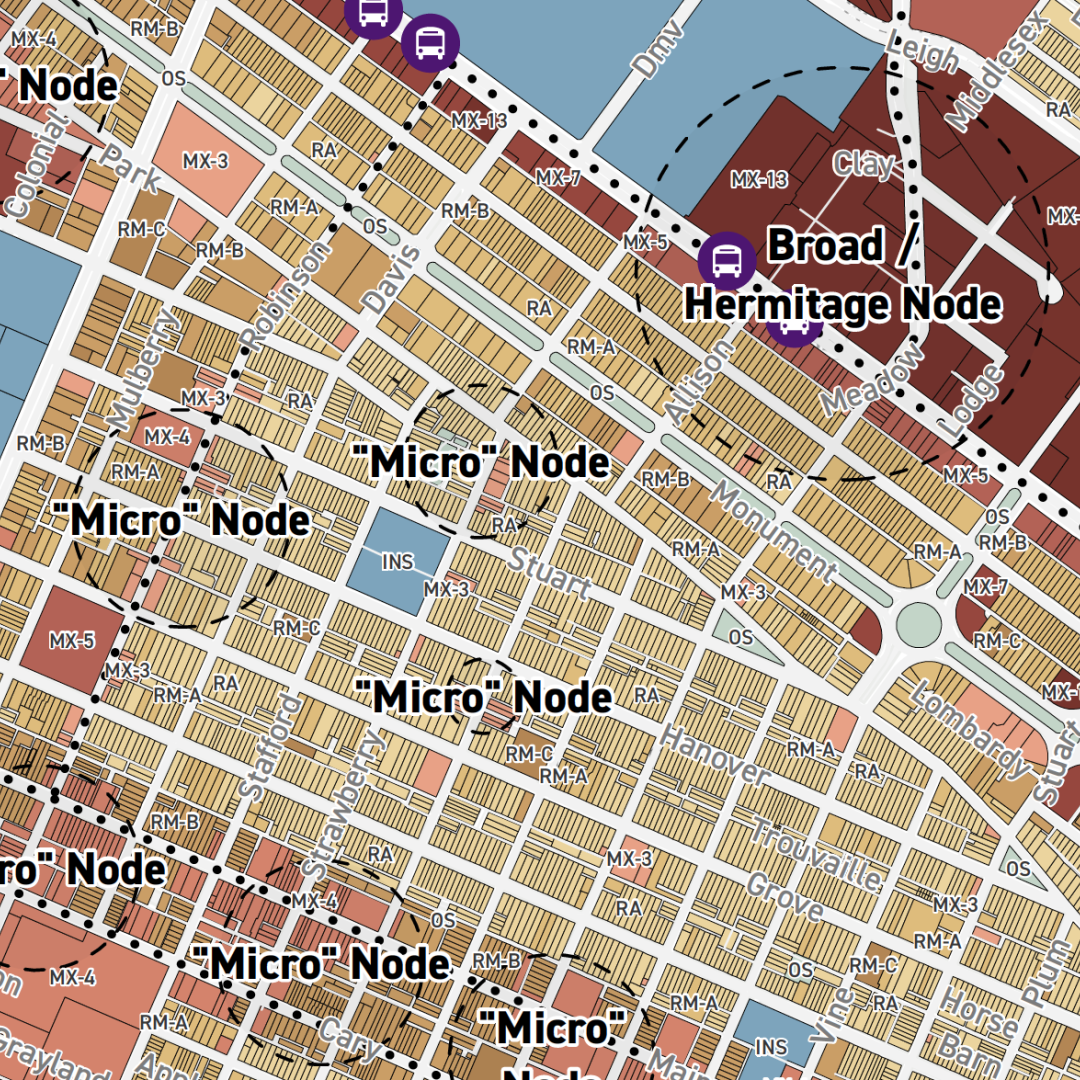
- Citywide Remapping: Translation of every parcel into the new district structure, aligning zoning with Blueprint Denver’s growth framework.
- Graphic, User-Focused Code: Extensive diagrams, tables, and cross-references to improve usability for staff, applicants, and community members.
- Administrative Streamlining: Clearer review pathways and defined approval criteria to increase predictability and reduce ad hoc negotiations.
Impact
Denver’s 2010 zoning code rewrite became one of the most influential large-city code overhauls of its era. It demonstrated how a legacy city could transition from conventional zoning to a calibrated, context-sensitive framework that balances neighborhood stability with long-term growth capacity.